1814
French & British Colonial Period
Treaty of Paris — British Colony
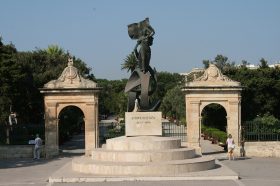
Through the Treaty of Paris in 1814, Malta officially became part of the British Empire — valued primarily for its strategic Mediterranean position
1919
French & British Colonial Period
Interwar period
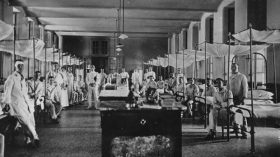
In 1919, the Sette Giugno (7 June) riots over the excessive price of bread led to greater autonomy for the locals during the 1920s. After Filippo Sciberras had convened a National Assembly, in 1921 self-government was granted under British rule. Malta obtained a bicameral parliament with a Senate (later abolished in 1949) and an elected Legislative Assembly. Joseph Howard was named Prime Minister. In 1923 the Innu Malti was played for the first time in public, and the same year Francisco Buhagiar became Prime Minister, followed in 1924 by Sir Ugo Pasquale Mifsud and in 1927 by Sir Gerald Strickland.
1939 - 1944
French & British Colonial Period
British Malta during the Second World War
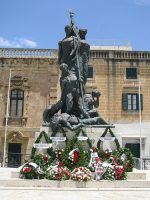
Before World War II, Valletta was the location of the Royal Navy's Mediterranean Fleet's headquarters. However, despite Winston Churchill's objections, the command was moved to Alexandria, Egypt, in April 1937 fearing it was too susceptible to air attacks from Europe. At the time of the Italian declaration of war (10 June 1940), Malta had a garrison of less than four thousand soldiers and about five weeks of food supplies for the population of about three hundred thousand. In addition, Malta's air defences consisted of about forty-two anti-aircraft guns (thirty-four "heavy" and eight "light") and four Gloster Gladiators, for which three pilots were available.
1953
French & British Colonial Period
From home rule to independence
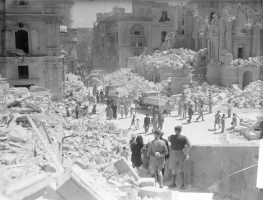
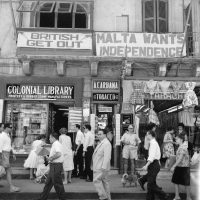
After the Second World War, the islands achieved self-rule, with the Malta Labour Party (MLP) of Dom Mintoff seeking either full integration with the UK or else "self-determination" (independence) and the Partit Nazzjonalista (PN) of George Borg Olivier favouring independence, with the same "dominion status" that Canada, Australia and New Zealand enjoyed.
1964
Independence & Modern Malta
Malta Independence
Malta gained independence from Britain on 21 September 1964, becoming a sovereign nation while remaining within the Commonwealth.