1964
Independence & Modern Malta
Malta Independence
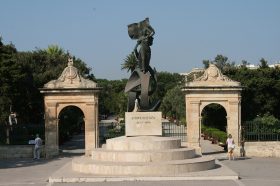
Malta gained independence from Britain on 21 September 1964, becoming a sovereign nation while remaining within the Commonwealth.
1971–1987
Independence & Modern Malta
Labour governments
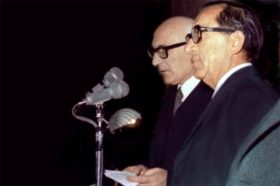
The elections of 1971 saw the Labour Party (MLP) under Dom Mintoff win by just over 4,000 votes. The Labour government immediately set out to re-negotiate the post-Independence military and financial agreements with the United Kingdom. The government also undertook nationalization programmes and the expansion of the public sector and the welfare state. Employment laws were updated with gender equality being introduced in salary pay. Concerning civil law, civil marriage was introduced and homosexuality and adultery were decriminalised (1973); capital punishment for murder was abolished in 1971. The following year, Malta entered into a Military Base Agreement with the United Kingdom and other NATO countries, after mediation by Italy's Aldo Moro.
1974
Independence & Modern Malta
Malta Becomes a Republic
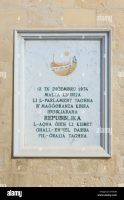
On 13 December 1974, Malta was declared a Republic, with a President as Head of State.
1979
Independence & Modern Malta
End of British presence and new regional alliances
Malta enshrined its neutrality and non-aligned status in the Constitution.
1987 - 2004
Independence & Modern Malta
Accession process to the European Union
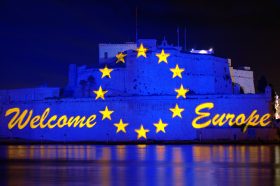
The general elections that followed in 1987 saw the Nationalist Party achieve such a majority of votes. The new Nationalist administration of Edward Fenech Adami sought to improve Malta's ties with Western Europe and the United States. The Nationalist Party advocated Malta's membership in the European Union presenting an application on 16 July 1990. This became a divisive issue, with Labour opposing membership.